
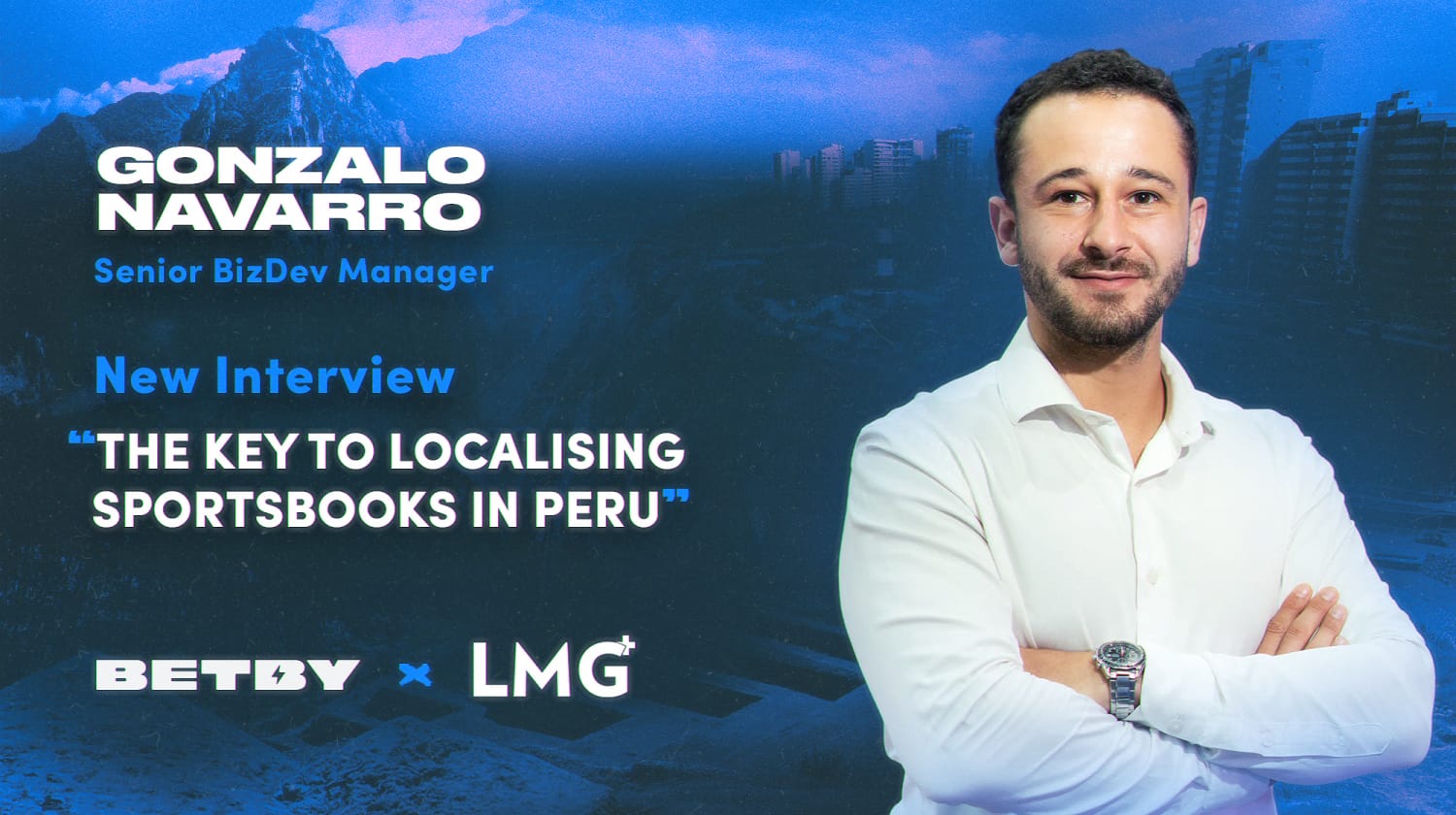
Proper sportsbook localization in Peru begins with the right content offering, but relies heavily on mobile performance, an omnichannel approach, and smarter personalization.
The online betting market in Peru grew strongly over the past year, despite the Selective Consumption Tax increasing to 1% on every bet. What does this tell us about the market?
It proves that the demand is very real. Peru became a much more active online market over the past year, and the fact that this happened despite the tax increase speaks volumes about how quickly betting is becoming part of daily life in the country.
But it also means that operators need to be more ambitious and, above all, disciplined. The 1% tax on every bet puts pressure on margins, competition is rising, and users have more options than ever before. The growth is there, but profitability now depends on operators' ability to retain players and keep them engaged.
Localization plays a key role in this regard. In Peru, a solid sportsbook must reflect local football habits, perform well on mobile devices, offer relevant promotions, and give users reasons to return beyond the initial bonus. These are the main factors operators need to care about.
So, if localization stems from user habits, what should operators know about Peruvian football bettors?
They must understand that, much like Brazilians, for example, Peruvian bettors know football very well. This is a market where users follow much more than just the big European matches. Peru's Liga 1, Copa Perú, Libertadores, Sudamericana, major European competitions—especially the Premier League, La Liga, and the Champions League—the national team, and regional competitions: all of it matters. Bettors closely follow rivalries, players, and the minor details that influence a match.
This generates a different expectation from sportsbooks, as the match itself is just the starting point. Operators need fast odds updates, detailed live betting, player props, statistical markets, same-game parlays (bet builders), early cash-outs, early payouts, and localized statistics.
BETBY's Bet Builder is a good example of this, as it gives players the flexibility to create their own vision of a match. It offers a high level of combinations and can adapt to different levels of football, from top-tier competitions to more regional football, depending on what each operator wants to prioritize locally.
In Peru, depth in football is what makes the difference between a generic sportsbook and a platform that feels local.
Those football insights will be important during the World Cup, even though Peru is not participating. How should operators prepare for it?
They must prepare for a tournament where attention will be massive but more scattered. Peru's failure to qualify changes the emotional focus of the World Cup, but it doesn't reduce betting opportunities. Peruvian users will follow neighboring countries like Argentina and Brazil, as well as all the stories emerging around the tournament involving global stars, records, and controversies.
That means operators need the right content strategy, and that is precisely what BETBY has invested in.
For instance, we were the first provider to offer odds for the entire World Cup bracket, from the group stage to the final, and we have very robust coverage across pre-match and live markets, outrights, player props, micro-betting, and special bets.
We also created a dedicated hub for the tournament featuring statistics, video content, live trackers, news, match timelines, and promotions, allowing bettors to fully immerse themselves in the tournament. Additionally, our eWorld Cup replicates the entire tournament through short-format eSports matches, helping operators maintain high engagement levels between real games.
In a country like Peru, which is naturally passionate about football, that is key. The national team won't be on the pitch, but the audience will still be watching, discussing, and betting.
Beyond major tournaments, what is the biggest product challenge operators face in Peru?
Probably the biggest challenge right now is creating a connected experience. Many PAM (Player Account Management) systems still struggle with omnichannel journeys, and that is a real issue in Peru. Users move between retail shops and online commerce, between mobile devices and social networks, between WhatsApp conversations and live betting. When those touchpoints are disconnected, operators lose a lot of context and visibility regarding the player's journey.
Mobile devices make this even more critical. Many users use mid-range Android devices with unstable mobile data and multiple apps open simultaneously, meaning the sportsbook must be lightweight, fast, and easy to use. Therefore, the basics become decisive: fast betslip loading, low-latency live sections, minimal clicks, a persistent betslip, optimized data consumption and streaming, quick deposits, popular bet carousels, and personalized homepages.
On top of that, live betting must also provide a sense of immediacy. Fast score updates, live stats, match timelines, trackers, and streaming, where possible, must now be part of the experience. If the sportsbook is slower than what is actually happening around the match, it loses relevance.
Prediction markets are also becoming a hot topic in Peru. Why do they fit this market?
Because they adapt to the way users already consume information. People are constantly reacting to topics like cryptocurrencies, politics, entertainment, culture, or sports news beyond the match itself, and prediction markets allow operators to turn those interests into simple, fixed-odds markets.
That's why we created BETBY Predictions specifically for operators. It doesn't use an exchange model, so there are no liquidity requirements or additional complexity for the player. It operates on fixed odds, making it easier to understand, integrate, and manage.
In Peru, the World Cup is a good example. As I mentioned earlier, even without Peru's participation, there will be stories around players, managers, records, controversies, and off-pitch moments. Well, prediction markets offer operators another way to capture that attention.
Furthermore, we have already created on-demand prediction markets for partners in Argentina and are extending that approach across Latin America, including Peru. If a topic makes sense to users, whatever it may be, we can create odds for it in a matter of minutes.
If you had to define the next stage of localization in Peru, what would it be?
Personalization, without a doubt. Once an operator has the right sports—besides football, it's important to offer volleyball, basketball, MMA, and tennis—the relevant markets, and an optimized mobile experience, the next step is tailoring the product to each user.
Two Peruvian bettors might love the same sport, but if one prefers accumulator bets (parlays) and the other prefers micro-betting, offering them the same user experience simply won't cut it. This is where BETBY’s AI Labs becomes highly important, as it delivers personalized experiences based on betting patterns rather than relying primarily on demographic data, as many operators still do.
That being said, promotions must follow the same logic. We notice that generic campaigns are losing effectiveness, while accumulator bonuses, cashback, free bets, risk-free first bets, and event-based offers work better when they appear at the right moment.
Stories, a feature we recently launched, fits perfectly here. It incorporates a swipeable format, similar to Instagram, into the sportsbook, helping operators highlight promotions, key events, and betting opportunities in a way that feels intuitive on mobile, since users are already familiar with it.
For me, this is the direction the Peruvian market must take: creating sports betting experiences that understand why each user returned and what will keep them engaged.

For the original article ➡️ click here